
How a Custom CRM Helps Growing Businesses Scale
A CRM is more than a database of contacts. Done well, it gives sales, operations and leadership one reliable view of growth.
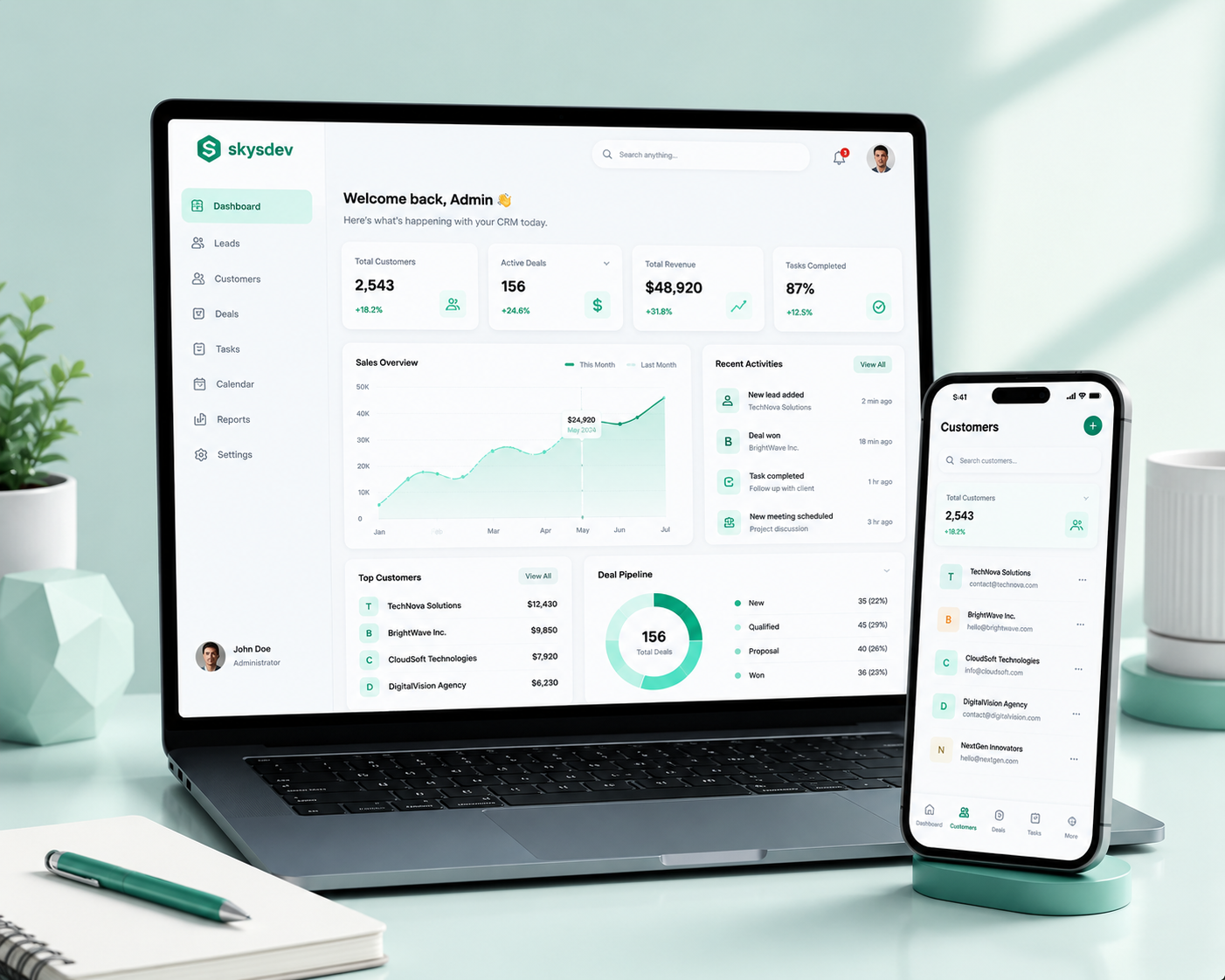
Growth creates more conversations, more handoffs and more opportunities for leads to disappear. A CRM brings those moving pieces into a repeatable process your team can trust.
Every lead has a clear next step
A good CRM makes ownership visible. Your team can see which leads are new, who is following up and what should happen next without searching through messages or personal notes.
That visibility turns inconsistent follow-up into a reliable sales rhythm.
Leadership can make decisions from live data
When reporting is manual, information arrives too late to guide the week ahead. A central dashboard can surface pipeline health, conversion trends and team activity in real time.
The goal is not more reporting. It is better decisions with less effort.
Automation protects the customer experience
Reminders, follow-up tasks and status notifications should not depend on somebody remembering them. Thoughtful automation helps the team respond quickly while keeping communication personal.
A custom CRM aligns with the way your team sells
A useful CRM reflects your actual customer journey: qualification, discovery, proposals, delivery, renewal and support. It should remove uncertainty at each handoff instead of adding another checklist for people to maintain.
This is why teams often outgrow rigid off-the-shelf setups. They need the right fields, reports and permissions for their own sales and operations model.
What to include in a CRM implementation plan
Begin with clean data, clearly defined pipeline stages and owners for each stage. Next, decide which actions need automation and which need human review. Finally, train the team around a simple daily habit: update the CRM when the work happens.
The measure of success is adoption. A simpler system used consistently creates more value than a complex system nobody trusts.
Common questions
Frequently asked questions
What does a CRM do for a growing business?
A CRM centralises customer information, sales activity and follow-up tasks so teams can manage opportunities consistently and leaders can see accurate pipeline data.
Should a small business use a CRM?
Yes, especially when leads are handled by more than one person or follow-ups are currently tracked in spreadsheets, inboxes or messaging apps.
Can a CRM automate follow-ups?
Yes. It can create tasks, send reminders, route leads and trigger approved communications based on the stage or activity in the pipeline.
Ready to build?